Showing posts with label newcastle-upon-tyne. Show all posts
Thursday, November 25, 2010
Sunday, September 19, 2010
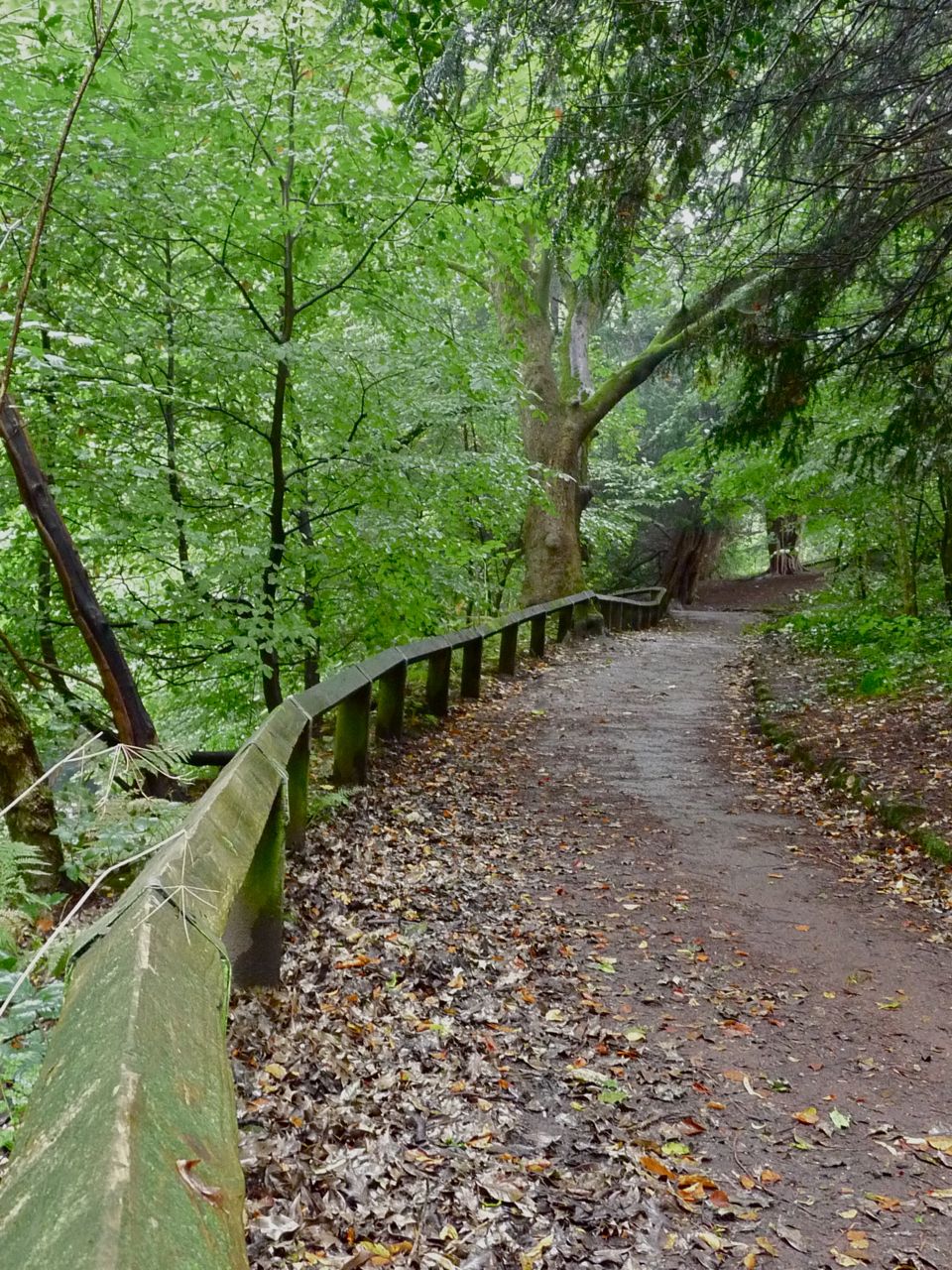
jesmond dene
Went for a 2 hour hike through Jesmond Dene - a long narrow forested valley along the Ouseburn which is one of the many glacial streams that were formed after the Ice Age - of course at the time it was likely to have been a raging torrent and this is what formed the valley as it made it way towards the River Tyne. In the 1850s Lord Armstrong, an industrialist and one of north-east England's most influential men (he manufactured armaments and warships), acquired the land of this valley and planted exotic trees and shrubs, laid paths and built bridges. It was his own private parkland until the 1880s, when he donated the parkland to city.
The city seemed far away once I descended into the valley and the smell of the forest - of trees, plants, moss, lichen, growth, decay and god only knows what else - filled the air. The forest smell was strangely intoxicating and I wondered a bit whether there was any way to capture that on camera. So some of these photos were taken with that in mind, though as I look at them now even I can't smell the forest anymore! For that will have to just go back to the dene for more walks.
The city seemed far away once I descended into the valley and the smell of the forest - of trees, plants, moss, lichen, growth, decay and god only knows what else - filled the air. The forest smell was strangely intoxicating and I wondered a bit whether there was any way to capture that on camera. So some of these photos were taken with that in mind, though as I look at them now even I can't smell the forest anymore! For that will have to just go back to the dene for more walks.Saturday, September 18, 2010
saints of northumbria
Saint Cuthbert (634-687) was a bishop in Northumbria and is regarded as the patron saint of Northumbria (for a bit more on Cuthbert, see one of my posts from last year on the breathtaking Durham Cathedral). And Saint Oswald (604-642) was King of Northumbria and later came to be venerated as a Christian saint. The two saints came to be posthumously associated - they had not been associated in life. Here we see them together in St. Nicholas's Cathedral in Newcastle which dates from the 14th-15th century.I visited St. Nicholas for the first time last weekend when Susanne was visiting. Same weekend, we spent some 2 hours in the Durham Cathedral, listening to the Evensong and Commemoration of the Battle of Britain - the latter was an interesting "cultural experience"; it was the choir that I really liked. Since St. Nicholas is barely 5-10 minutes away from home, I'm thinking I'll stroll down there and attend Evensong once in a while. Here is a very short piece in The Guardian on the Choral Evensong as one of England's richest traditions.
Friday, August 20, 2010
Saturday, August 7, 2010
Sunday, July 11, 2010
Thursday, August 27, 2009
a musician outside the baltic
Wednesday, August 26, 2009
a walk in newcastle
Last Saturday I did a long walk in Newcastle. I'd been to Newcastle several times, either for work-related meetings or to see a movie at Tyneside, a charming independent cinema-theater. But I'd been wanting to spend some time walking and exploring the city. Steve (one of the professors I work with) had, in fact, given me a 2-3 hour walking tour of the city in early August and he'd pointed out the Byker Wall in the distance. The Byker Wall is a public housing project ("social housing" in the UK). I had read about it as an undergraduate architecture student, part of my early interest in urban housing. So last Saturday Byker was the destination of my walk but I spent quite a bit of time exploring the city along the way.
Starting from the Central Station (the main railway station),
I walked through Grainger town,
the historic centre which was planned and built in the early/mid 1800s,

towards the Tyne Bridge,
a beautiful compression arch suspended deck bridge built in the 1920s (photo below),
and Quayside,
the area along the River Tyne which has been the centre of urban regeneration efforts since the 1990s,

where I crossed the Millenium Bridge (the white bridge in the distance in the above photo; also in the photo below),
to sit in the sun outside the Baltic, a flour mill beautifully converted into a contemporary art gallery (photos below), and
the Sage (the shiny curvaceous building in the photo above), designed by Norman Foster,
one of those iconic architectural projects
that have been at the centre of controversial urban regeneration efforts
in deindustrialized cities in the West.
Controversial because they spend millions (taxpayers' money) on projects that usually do little (often nothing) to address
the socio-economic problems and massive unemployment caused by deindustrialization.
Newcastle, I must tell you here,
had a thriving coal mining & manufacturing industry
which Thatcher killed in the 1980s.
On my first walk in the city with Steve, he'd told me that many parts of the city used to be grimy, black, during the heydey of its coal mining & manufacturing days.
Maybe that is why my mother remembers Newcastle as a pretty horrible looking city (she'd lived and worked for a year as a physiotherapist near Newcastle in the mid-1960s).
Newcastle was also one of the world's largest ship-building and repairing centres,
of whose history I do not know enough.

To come back to my walk,
I then walked back over the Millenium Bridge, and away from the river
through an industrial looking area,
to the Byker Wall (seen in the distance in the photo below).
I spent quite a bit of time roaming about Byker and this calls for a separate blog post, especially since I want to first finish reading some recent academic articles I downloaded on the project before I put up any more photos. Byker, which was built in the mid-1970s, is well-known among the architectural-planning community - it was designed by British architect Ralph Erskine and was a project that involved participatory design, unusual for social/public housing projects in Britain at the time. And yet, Byker has had its share of social problems. This is what I want to read about. So more in a couple of days.
Starting from the Central Station (the main railway station),
I walked through Grainger town,
the historic centre which was planned and built in the early/mid 1800s,

towards the Tyne Bridge,a beautiful compression arch suspended deck bridge built in the 1920s (photo below),
and Quayside,
the area along the River Tyne which has been the centre of urban regeneration efforts since the 1990s,

where I crossed the Millenium Bridge (the white bridge in the distance in the above photo; also in the photo below),to sit in the sun outside the Baltic, a flour mill beautifully converted into a contemporary art gallery (photos below), and
the Sage (the shiny curvaceous building in the photo above), designed by Norman Foster,
one of those iconic architectural projects
that have been at the centre of controversial urban regeneration efforts
in deindustrialized cities in the West.
Controversial because they spend millions (taxpayers' money) on projects that usually do little (often nothing) to address
the socio-economic problems and massive unemployment caused by deindustrialization.
Newcastle, I must tell you here,
had a thriving coal mining & manufacturing industry
which Thatcher killed in the 1980s.
On my first walk in the city with Steve, he'd told me that many parts of the city used to be grimy, black, during the heydey of its coal mining & manufacturing days.
Maybe that is why my mother remembers Newcastle as a pretty horrible looking city (she'd lived and worked for a year as a physiotherapist near Newcastle in the mid-1960s).
Newcastle was also one of the world's largest ship-building and repairing centres,
of whose history I do not know enough.

To come back to my walk,I then walked back over the Millenium Bridge, and away from the river
through an industrial looking area,
to the Byker Wall (seen in the distance in the photo below).
I spent quite a bit of time roaming about Byker and this calls for a separate blog post, especially since I want to first finish reading some recent academic articles I downloaded on the project before I put up any more photos. Byker, which was built in the mid-1970s, is well-known among the architectural-planning community - it was designed by British architect Ralph Erskine and was a project that involved participatory design, unusual for social/public housing projects in Britain at the time. And yet, Byker has had its share of social problems. This is what I want to read about. So more in a couple of days.
Subscribe to:
Posts (Atom)